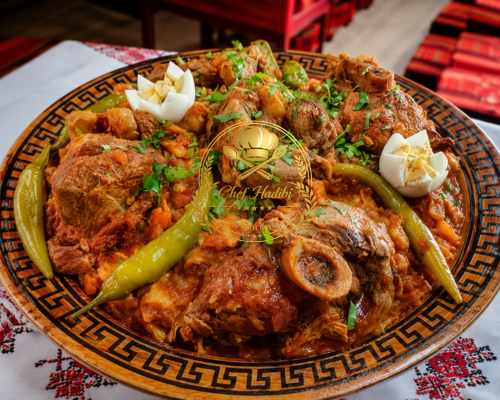

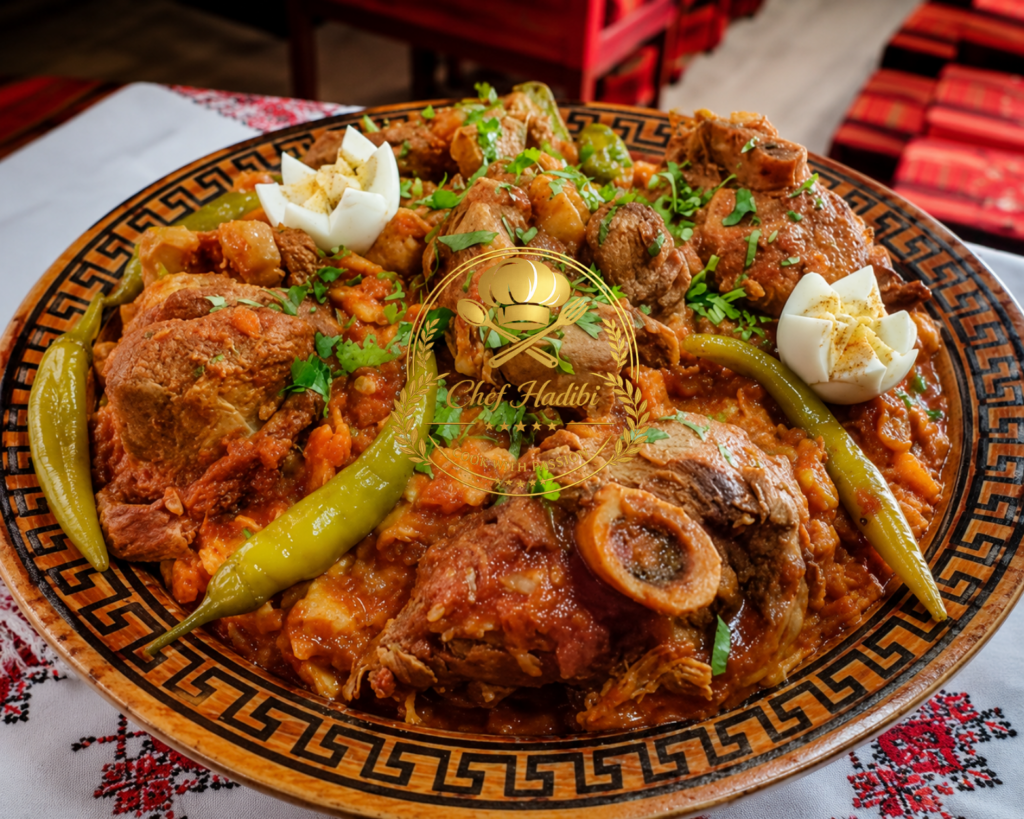
Bou Saâda Chakhchoukha is one of the best known traditional dishes of Bou Saâda city in Algeria. It is a special dish of Algeria, characterized by a combination of simple ingredients and exceptional tastes. Bou Saâda Chakhchoukha is remarkable because of its authentic spirit and preparation. The dough is made manually into the thin flatbread and cooked to form Chakhchoukha bread pieces. These pieces are continuously soaked in a rich sauce.
Traditionally, it is made using thin sheets of semolina dough and torn into small pieces by hand later. The pieces are gradually saturated in a rich sauce that is made from tomatoes, onions, garlic, peppers, chickpeas, and spiced with various spices. Sometimes, the sauce can contain meat pieces, usually lamb, which makes it even richer in flavors.
The most interesting thing about Bou Saâda Chakhchoukha is that it is necessary to have the ideal proportion of the bread pieces and sauce. They should neither be too dry nor too wet, rather they should absorb the sauce uniformly. Thus, each bite is delicious on the whole. The presence of the chickpeas is also important for positive emotions from this dish.
Bou Saâda Chakhchoukha is typically described as one of the signature dishes of the country, being served on a large communal plate along with meat as well as chickpeas placed on top. It is a fulfilling and substantial dish often eaten when together with family and friends on festive occasions and gatherings. In addition to being a traditional dish, Bou Saâda Chakhchoukha also represents an important part of the culinary culture of the Bou Saâda region. The components and method of preparation served as a means to preserve the past in connection with genuine Arabic cuisine, uniting the art of working with dough, the richness and taste of delicious sauce, and friendliness when having meal together.
M’Sila Chakhchoukha with a Rich Red Sauce
Time to Prepare the Dish: 25 minutes
Cooking the Dish: 45 minutes
Dish to Rest: 30 minutes
Total Cooking Time: 1 hour and 40 minutes
Type of Cuisine: Algerian
Geographical Region: M’Sila / Bou Saâda, Algeria
Serves How Many People: 6-8
Ingredients
Chakhchoukha Flatbread
500 g fine or extra-fine semolina
8 g salt
Water (as much as necessary to prepare a smooth and pliable dough)
Oil (any kind of vegetable oil) for cooking and shaping
Traditional Red Sauce
500 g lamb or beef
A few pieces of chicken’s thighs
400 g canned peeled tomatoes
2 middle-sized onions (finely chopped)
2 cloves of garlic (crushed)
2 tbsp tomato paste
1 bowl of chickpeas (soaked overnight and rinsed)
Any kind of cooking oil or traditional smen (clarified butter)
½ tbsp paprika (or to taste)
½ tsp ground red pepper
½ tbsp ras el hanout
Black pepper to taste
Salt to taste
1 piece of fresh green chili
Fresh coriander (chopped) for decoration.
Preparation
- Making Chakhchoukha Flatbread
The dough can be prepared with the help of a mixer or dough-making machine.
Put the semolina along with salt into a large bowl or bowl of a mixer. Gradually add water to it while stirring to obtain a soft, smooth, and pliable dough.
Start kneading the dough at low speed and then increase the speed and knead for about 10 minutes until it is soft and elastic.
Lightly grease your hands with oil and divide the dough into balls size of a small clementine.Lightly oil
each dough ball, cover with plastic wrap, and let the dough rest for about 30 minutes.
Put some oil on the worktop and gently stretch one of the balls into a thin layer.
The layer should be slightly thicker than the normal rougag layers.
Cook the layer on both side over the appropriate heated surface being careful not to burn it.
Once cooked tear or break the layer into small pieces. Do the same with the rest of the dough balls.
Chef’s Tip
The goal is to obtain thin, flexible sheets that can absorb the sauce without becoming excessively soft or turning into a paste. Avoid overcooking the flatbread, as overly crisp pieces will not absorb the sauce evenly.
2. Preparing the Traditional Red Sauce
- Heat a small amount of neutral oil or smen in a large heavy-bottomed pot.
- Brown the lamb or beef and the chicken drumsticks lightly.
- Add the finely sliced onions and crushed garlic. Sauté until the onions become soft and translucent.
- Add the peeled tomatoes, tomato paste, paprika, ground chili pepper, ras el hanout, black pepper, and the rinsed chickpeas.
- Stir well and allow the mixture to cook gently for 5–10 minutes, allowing the spices and tomato to develop their flavors.
- Add a small amount of hot water to loosen the sauce and continue simmering.
- Add enough hot water to create a rich cooking broth, then cover the pot and allow the meat and chickpeas to cook.
- Once the chicken is fully cooked, carefully remove the drumsticks and set them aside.
- Continue cooking until the lamb or beef becomes tender and fully cooked.
- Taste the sauce and adjust the salt and spices as needed. Check the consistency and add additional hot water if necessary.
- Add the fresh green chili pepper to the sauce and allow it to cook gently. Alternatively, grill the chili pepper separately and serve it alongside the finished dish.
3. Finishing and Serving the Chakhchoukha
- Steam the torn chakhchoukha pieces briefly to soften and warm them evenly.
- Transfer the steamed pieces to a large serving platter.
- Gradually ladle the hot red sauce over the chakhchoukha, allowing the pieces to absorb the sauce without becoming excessively saturated.
- Add the chickpeas and arrange the cooked meat and chicken pieces on top.
- Garnish generously with freshly chopped coriander.
- Serve immediately with the cooked green chili pepper.
- Additional spices may be offered separately according to individual preference.
Traditional serving suggestion: Serve the chakhchoukha communally in a large platter, allowing the meat and chickpeas to remain visible on top while the bread underneath absorbs the rich red sauce.
Estimated Nutritional Information
The following values are estimated for the complete recipe, based on the listed ingredients and typical food-composition data. Actual values will vary according to the type and quantity of meat, amount of oil or smen used, portion size, and how much sauce is consumed.
Approximate nutrition for the entire prepared dish
| Nutrient | Estimated Amount |
|---|---|
| Calories | 3,500–4,200 kcal |
| Protein | 190–230 g |
| Total Fat | 110–160 g |
| Saturated Fat | 35–55 g |
| Carbohydrates | 430–500 g |
| Dietary Fiber | 45–60 g |
| Total Sugars | 30–45 g |
| Sodium | 3,500–5,500 mg |
| Cholesterol | 500–750 mg |
Approximate nutrition per serving
If divided into 8 servings:
- Calories: approximately 440–525 kcal
- Protein: approximately 24–29 g
- Carbohydrates: approximately 54–63 g
- Fat: approximately 14–20 g
- Dietary Fiber: approximately 6–8 g
Important Nutritional Note
These figures are estimates rather than laboratory-tested nutritional values. The largest variables are the quantity and type of meat, whether oil or smen is used, the amount of added oil, the sodium content of the canned tomatoes and tomato paste, and the final amount of sauce absorbed by the chakhchoukha.
For a commercial cookbook requiring legally compliant nutrition labeling, the recipe should be standardized by exact ingredient weights and analyzed using an appropriate food-composition database or laboratory nutritional analysis.
Chef’s Notes & Professional Tips
1. Build Flavor in Layers
Do not rush the sauce. Browning the meat first creates a deeper flavor, while gently cooking the onions, garlic, tomato, and spices develops the foundation of the red sauce.
2. Control the Sauce Consistency
The sauce should be rich and flavorful but sufficiently fluid to penetrate the chakhchoukha pieces. A sauce that is too thick will not distribute evenly; a sauce that is too watery may make the bread excessively soggy.
3. Use Hot Water
When additional liquid is needed, use hot water rather than cold water. This helps maintain the cooking temperature and prevents unnecessary interruption of the simmering process.
4. Steam Before Saucing
Briefly steaming the torn flatbread before adding the sauce helps soften it evenly and improves its ability to absorb the broth.
5. Do Not Drown the Bread
Add the sauce gradually. The best texture is achieved when the chakhchoukha absorbs enough sauce to become tender while retaining a slight structure.
6. Choose the Fat According to Tradition
Neutral vegetable oil produces a lighter, cleaner flavor. Smen gives the dish a deeper, more traditional richness and aroma. Use it moderately because its flavor is powerful.
7. Balance the Heat
The chili pepper should complement the sauce rather than overpower it. For a family-friendly version, reduce the ground chili and serve the fresh chili separately.
8. Improve the Tomato Flavor
Allow the tomato paste to cook with the meat, onions, and spices for a few minutes before adding large amounts of water. This helps develop a deeper and less raw tomato flavor.
9. Let the Meat Become Tender
The meat should be cooked until tender enough to separate easily with a fork. Avoid excessive boiling, which can make the sauce less refined and may affect the texture of the meat.
10. Rest Before Serving
After combining the chakhchoukha with the sauce, allow it to stand for 2–3 minutes before serving. This gives the bread time to absorb the flavors while retaining its texture.
Traditional Presentation
For an authentic presentation, place the prepared chakhchoukha in a large traditional serving platter. Distribute the chickpeas throughout the dish, then arrange the lamb or beef and chicken pieces prominently on top. Finish with freshly chopped coriander and serve the green chili alongside the platter.
The ideal final dish should have:
Tender chakhchoukha + rich red sauce + tender meat + creamy chickpeas + aromatic spices + fresh coriander + a gentle touch of chili heat.
This combination represents the distinctive character of M’Sila-style Chakhchoukha, a hearty Algerian dish deeply associated with traditional hospitality, family gatherings, and communal dining.